
You can build a solid, code-compliant patio cover yourself in a weekend or two. The basic sequence is: pick your style, pull a permit, set posts or attach a ledger board to the house, frame your beams and rafters with the right slope, then install your roof panels or roofing material. A single-slope lean-to attached to the house is the most beginner-friendly build, and that's what this guide walks through in detail, with notes on what changes for a gable or freestanding design.
YouTube How to Build a Patio Cover: DIY Step by Step

Celia Vaughn
24 Jun 2026
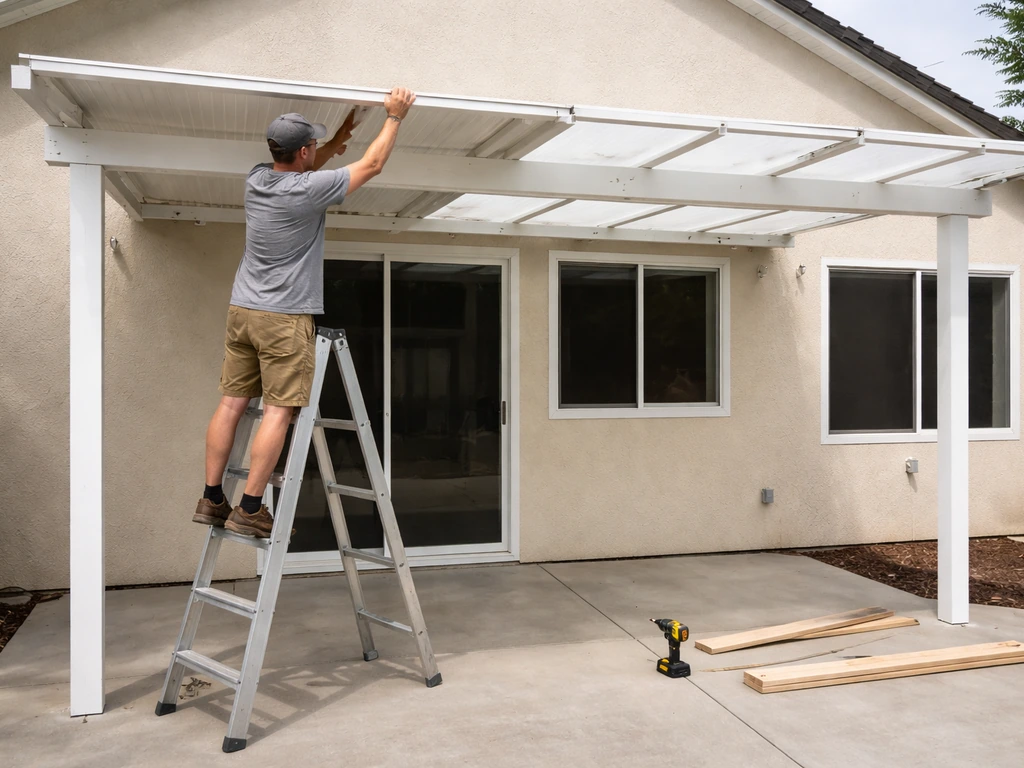
Pick your patio cover style before you buy anything
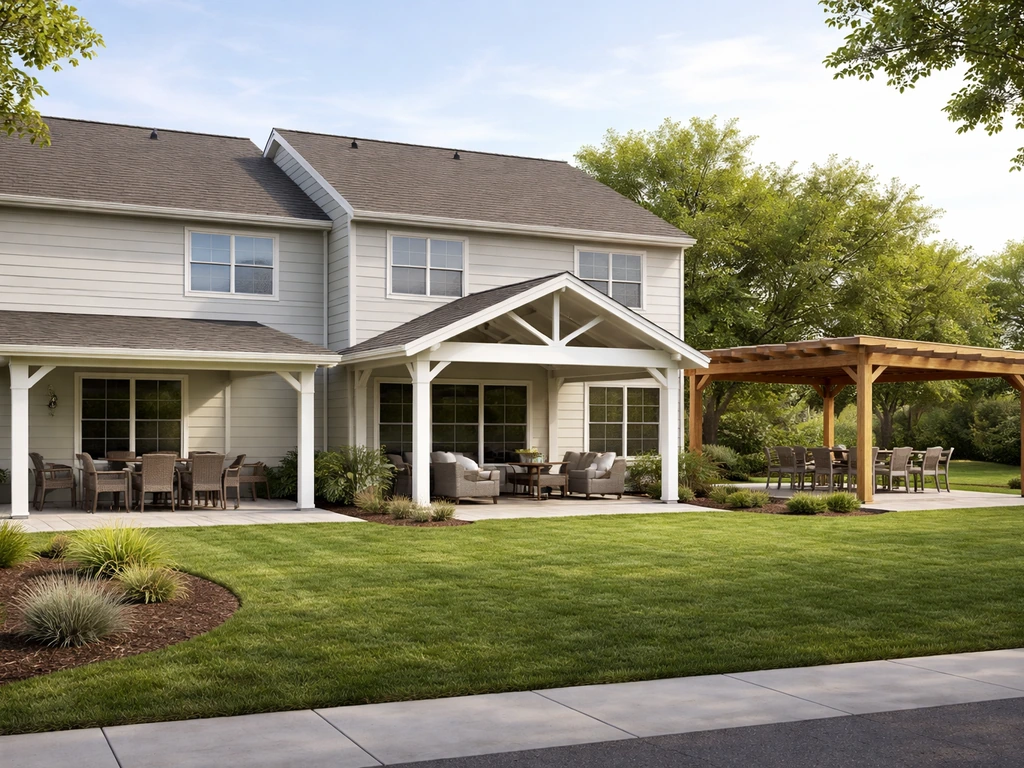
The style you choose drives every other decision: post spacing, beam size, roof material, attachment method, and permit complexity. Get this decision right first and the rest of the build flows logically. If you want a smoother build path, a step by step patio cover plan can also guide your timeline from permits to framing and roofing.
Lean-to (single-slope) attached to the house
This is the most popular DIY build and the one most YouTube tutorials cover. One end of the roof attaches to the house wall via a ledger board, and the other end rests on posts at the outer edge. The roof slopes down and away from the house, which is exactly what you want for drainage. It's structurally simpler than a gable, needs fewer materials, and is easiest to make watertight at the house connection. If you're a first-time builder, start here.
Gable (peaked) roof
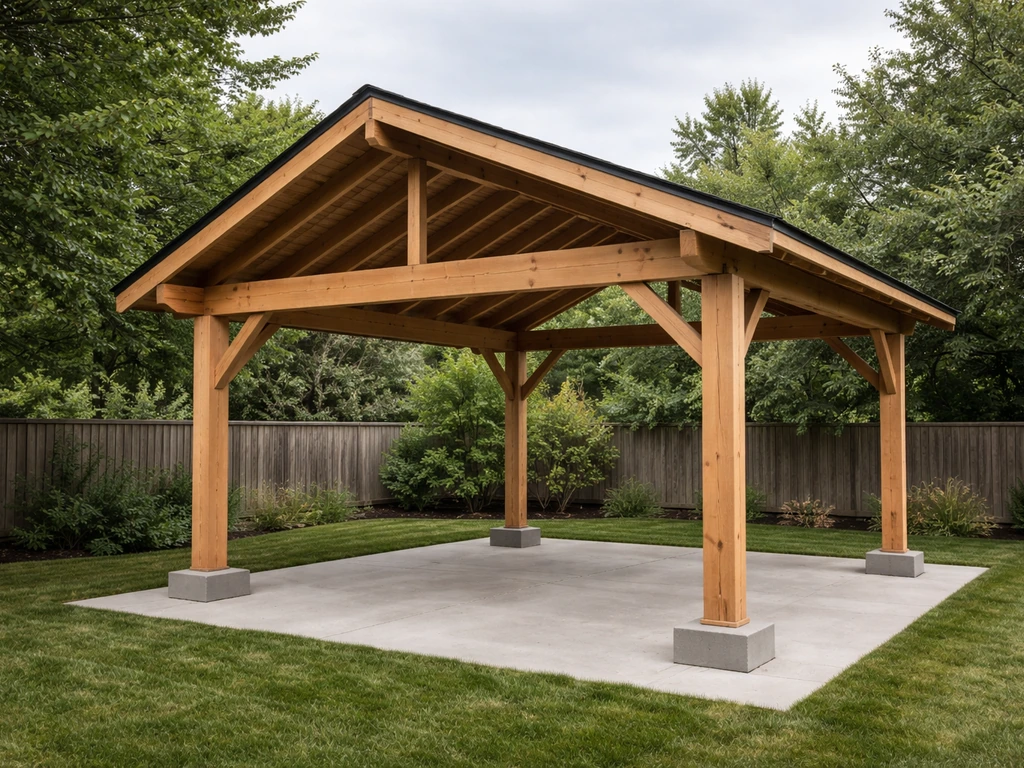
A gable patio cover has a ridge in the center and two slopes. It looks more like a room addition, handles snow and rain better in wet climates, and can span wider distances. The trade-off is more complexity: you need a ridge beam, two sets of rafters, and more precise cuts. Wind loads are also higher because of the larger surface area. If you want a gable, the framing principles here still apply, but plan on more time and consider getting a set of engineered drawings if your span exceeds about 12 feet.
Freestanding (post-and-beam)
A freestanding cover doesn't attach to the house at all. Four (or more) posts carry the entire load, which means every post needs a footing below frost line. The upside is no ledger attachment, no flashing headaches, and you can position it anywhere in the yard. The downside is more concrete work and the structure has to be braced against racking (side-to-side movement) independently, since it can't borrow stability from the house wall. It's a good option when the house wall makes attachment tricky or when you want a pergola-style structure over a detached patio.
Measure, plan, and sort out permits before you dig
Skipping the permit is the single most common mistake on patio cover builds, and it creates real problems when you sell the house or need a repair. Most jurisdictions require a permit for any permanent roof structure attached to the home or exceeding a certain square footage. Pull the permit first, not after. Once you know the permit requirements, you can follow build a patio cover instructions that match your specific attached or freestanding design.
How to measure your space and lay it out
- Measure the width of the area you want to cover along the house wall. This becomes your ledger length.
- Measure how far out from the house you want the cover to extend. This is your rafter span. Most residential lean-tos run 8 to 14 feet out from the house.
- Decide on post height. At the outer edge, most people want at least 7 feet of clearance. The ledger end at the house will be higher to create slope.
- Calculate your slope. A minimum of 1 inch of vertical drop per foot of run is the floor for polycarbonate and corrugated panels. For better drainage, aim for 2 to 3 inches per foot. On a 12-foot span, that means the ledger sits 12 to 36 inches higher than the outer beam.
- Mark post locations on the ground with stakes. Posts typically go at the corners and at intervals no greater than 8 feet for standard lumber sizes.
- Check for square using the 3-4-5 triangle method: measure 3 feet along one side, 4 feet along the perpendicular side, and confirm the diagonal is 5 feet.
Permits and code basics
Under the 2024 International Building Code (Appendix I), patio covers must be designed to handle a minimum vertical live load of 10 pounds per square foot, plus dead load, wind loads, and snow loads where they apply. Your local building department sets the specific numbers based on your climate zone. Call or visit the permit counter before you finalize your design. Tell them the square footage, whether it's attached or freestanding, and what roofing material you're using. They'll tell you what they need: sometimes just a hand-drawn site plan, sometimes stamped engineering drawings. In many areas, aluminum patio cover kits with an ICC-ES evaluation report (under AC340) get approved quickly because the engineering is already done by the manufacturer.
Also check your HOA CC&Rs if you have one. Some prohibit corrugated metal or polycarbonate roofing or require color approval. It's faster to find this out now than after you've framed the thing.
Choosing your materials: wood vs. aluminum, and which roof panel works best
This is where a lot of homeowners spend too much time second-guessing themselves. The honest answer is that both wood and aluminum work well; the choice comes down to your climate, budget, and skill level.
| Feature | Wood Framing | Aluminum Framing |
|---|---|---|
| Cost (materials only) | Lower upfront (pressure-treated lumber is widely available) | Higher upfront, but often sold as complete kits |
| DIY difficulty | Standard carpentry skills; easy to cut and adjust on site | Follows kit instructions; less flexible for custom sizing |
| Maintenance | Needs periodic sealing, staining, or painting | Essentially maintenance-free once installed |
| Lifespan | 15-25+ years with proper sealing and painting | 30+ years with minimal care |
| Best climate for | Most climates if maintained; avoid in high-humidity/rot-prone areas unless you use pressure-treated throughout | Coastal, humid, or high-UV climates |
| Permit complexity | Standard lumber sizing is easy for inspectors to verify | Kit with ICC-ES report often fastest to approve |
For most DIYers on a budget building a lean-to in a moderate climate, pressure-treated lumber for the framing is the practical choice. Use at minimum 4x4 posts and size your beams according to your span (a 2x8 or doubled 2x8 typically handles an 8- to 12-foot span; get the beam span chart from your local lumber yard or building department to confirm for your specific load and species). Screen-house’s patio cover kit documentation also illustrates common beam options and how beam span relates to post spacing, as a starting point for span selection size your beams according to your span.
Roofing options for a DIY patio cover
- Polycarbonate panels (solid or multiwall): Let light through, lightweight, easy to cut with a circular saw. Require a minimum 1-inch-per-foot slope (2-3 inches is better). Multiwall panels insulate better than solid. Seal the ends with aluminum tape to keep bugs and moisture out of the flutes.
- Corrugated FRP (fiberglass reinforced plastic): Translucent, very affordable, widely available at home centers. Needs at least 1-inch-per-foot slope. Overlap by at least one corrugation on sides. Use closure strips (foam or rubber) at eaves and ridges to seal out rain and debris.
- Corrugated metal (galvanized or Galvalume): Opaque, durable, low maintenance. Overlap so the higher sheet's edge faces downhill, not uphill, so water sheds over rather than under the joint. Works well in high-wind zones when fastened correctly.
- Composite or asphalt shingles: Familiar to most homeowners. Requires solid sheathing underneath (typically 1/2-inch plywood), felt underlayment, and proper drip edge installation. Drip edge should extend at least 1/2 inch below the sheathing and overlap the top edge by 2 inches. Works better on steeper slopes (minimum 2:12 for most shingles).
- Shade cloth or lattice: Not waterproof but excellent for solar shade in hot climates. Fast and affordable. No roofing material needed, just the framing.
Footings, posts, and framing: the structural core of your build
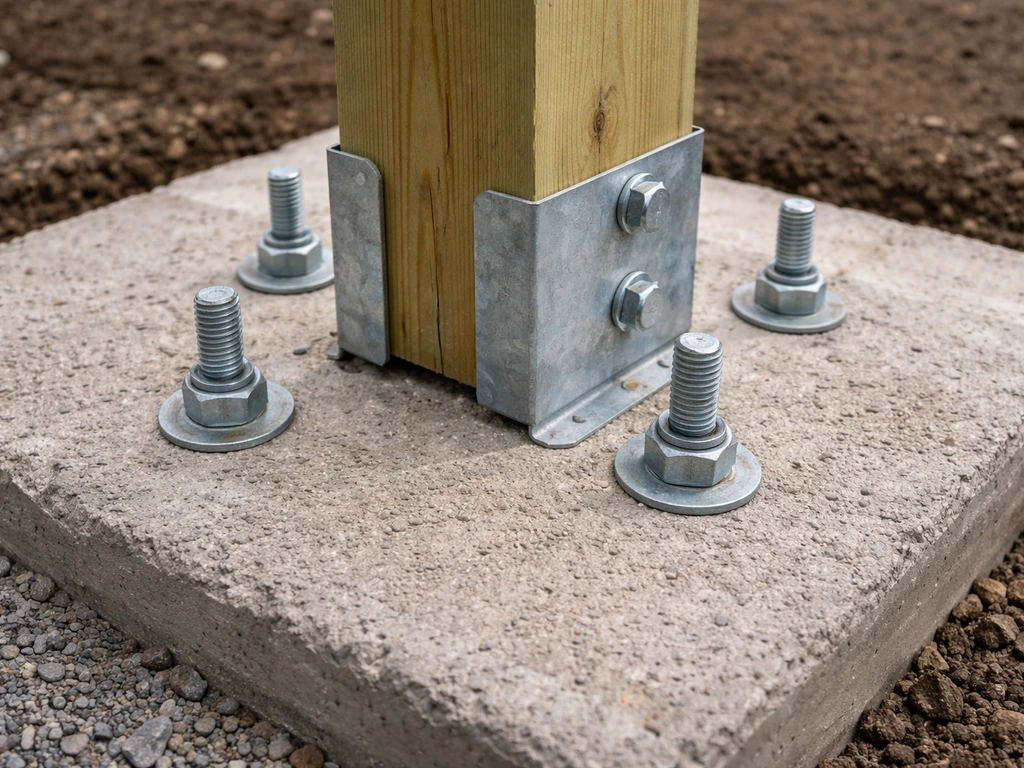
This is the part that separates a cover that lasts 30 years from one that shifts, leans, or gets flagged by an inspector. Get the footings right and everything above them is straightforward.
Footing depth and size
Your footings must extend below the frost line, which is determined by your local building department (it varies from 0 inches in South Florida to 60+ inches in northern Minnesota). If your local frost depth is zero, the 2024 IBC allows a patio cover to rest on a concrete slab on grade, provided the slab is at least 3-1/2 inches thick and column loads don't exceed 750 pounds per column. For most of the country, though, you're digging. A standard 12-inch diameter tube footing with a flared bottom works for most residential patio covers. Mix your concrete per the bag instructions and let it cure 24 to 48 hours before setting post bases.
Post installation
Don't set posts directly in concrete if you can avoid it. Use adjustable post bases (also called standoff post bases) anchored into the footing while the concrete is still wet. This keeps the wood off the ground, which dramatically extends post life and lets you replace a post without jackhammering. Plumb each post with a level on two adjacent faces before bracing temporarily. For a lean-to, outer posts are typically shorter than the ledger height to create your slope.
Beam and rafter framing
The outer beam sits on top of the posts and runs parallel to the house. Use post caps to connect the beam to each post top. Post caps straddle both the top of the post and the bottom of the beam, transferring loads properly and resisting uplift. Simpson Strong-Tie and similar hardware brands make post cap hardware rated for specific loads; match the hardware to your post and beam size. Rafters then run from the ledger on the house side down to the outer beam, typically at 16 or 24 inches on center. Use joist hanger hardware at both ends of each rafter rather than toe-nailing, especially if you're in a wind-prone area.
How to attach the cover to your house safely
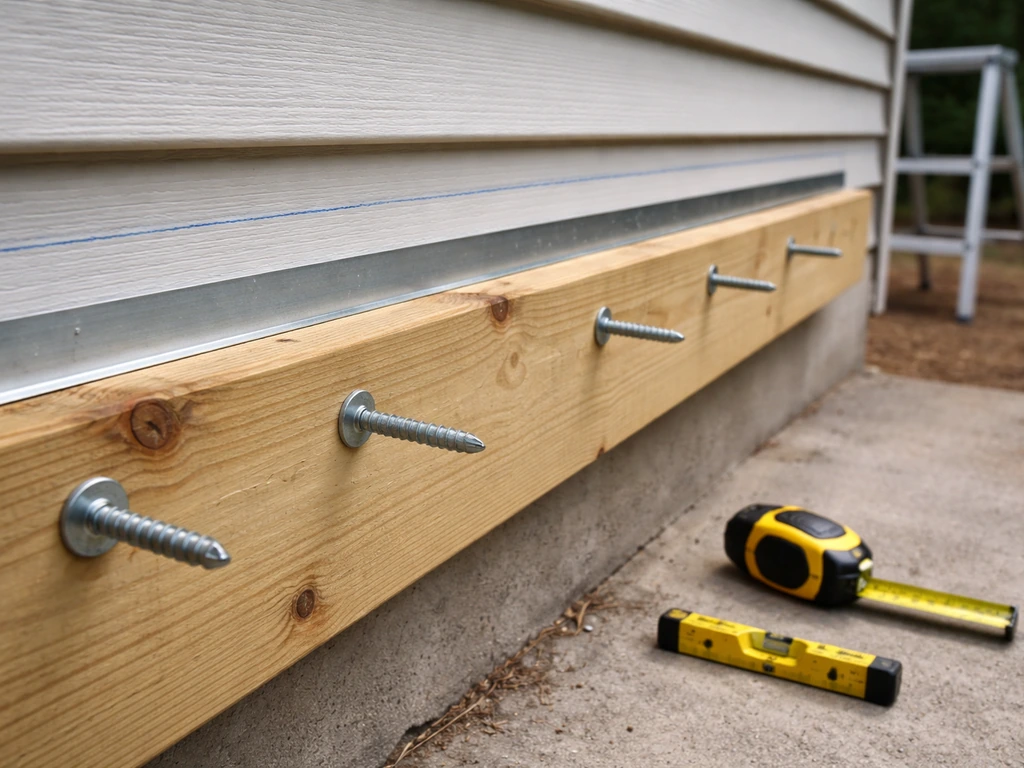
The ledger-to-house connection is where most leaks and structural failures happen on attached patio covers. Do this step carefully and don't rush the flashing.
Installing the ledger board
- Snap a level chalk line on the house wall at your desired ledger height. Remember your slope calculation: the ledger sits higher than the outer beam by your total rise amount.
- If your house has siding (wood, vinyl, or fiber cement), cut it back along the chalk line so the ledger contacts the house sheathing directly. Use a circular saw set to the siding depth only.
- Hold the ledger board against the wall and drill pilot holes through it and into the rim joist or wall framing behind the sheathing. Use 1/2-inch lag screws or structural ledger bolts (LedgerLOK type) spaced every 16 inches, staggered slightly up and down.
- Before final tightening, slip flashing behind the siding above the ledger. The flashing should run up behind the siding at least 3 inches and bend down over the top of the ledger face. This is the step most people skip and regret later.
- Caulk the top edge of the flashing where it meets the siding with a high-quality polyurethane or silicone sealant rated for exterior use. Do not caulk the bottom of the flashing, as that edge needs to be able to drain.
Flashing and sealing: what often goes wrong here
The most common mistake is relying entirely on caulk instead of proper step flashing or continuous Z-flashing behind the siding. Caulk alone will fail within a few years, especially in climates with freeze-thaw cycles. If your house has stucco siding, this connection gets even more complicated because stucco can't just be cut back cleanly. For a stucco wall, the ledger detail often requires a different approach entirely, and it's worth looking at stucco-specific guidance or consulting a local contractor before you commit to an attached design. For a stucco wall, the ledger detail often requires a different approach entirely, and it's worth looking at stucco-specific guidance or consulting a local contractor before you commit to an attached design. (If you're planning a stucco patio cover, this is the moment to align the attachment details with the build plan: how to build a stucco patio cover.).
Installing roof panels and managing drainage, slope, and wind
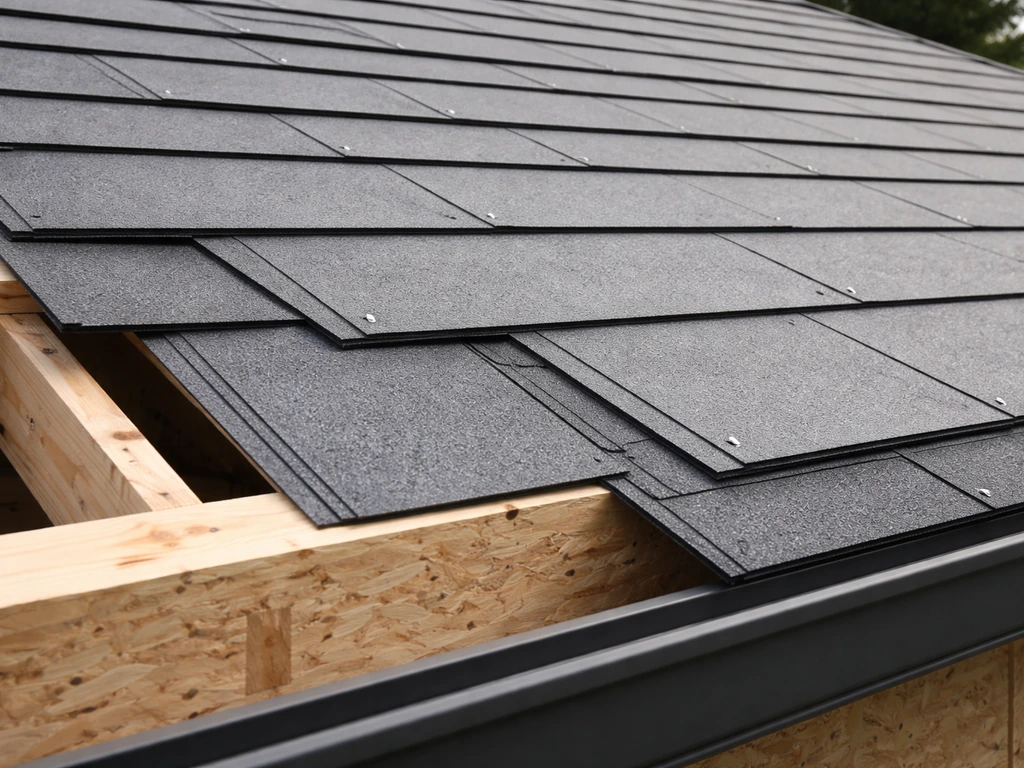
Once the framing is up and inspected (get your rough framing inspection before you put on the roof), installing the panels goes quickly. The drainage and wind details are where you earn the longevity of the whole project.
Panel installation sequence
- Start at the end of the structure that is downwind of the prevailing wind in your area. This means the panel edges that overlap will face away from the direction storms typically come from.
- For corrugated panels, lay your first panel and drill pilot holes slightly larger than your screw diameter (polycarbonate expands and contracts with temperature). Use roofing screws with neoprene washers at every rib along the rafters.
- Overlap the next panel by at least one full corrugation (about 1.5 inches for most profiles). On the side laps, use one fastener per rib in the overlap zone.
- For multiwall polycarbonate sheets, seal both open ends with aluminum tape before installation. The top (high) end should also have an aluminum closure strip under the tape to keep insects out.
- At the eave (low end), install a drip edge that extends at least 1/2 inch below the framing edge and overlaps the top edge of the fascia or framing by at least 2 inches.
- At the ridge or house wall connection for an attached lean-to, tuck the top end of the panel under the flashing that wraps from the house wall. This is your primary leak defense at the house connection.
Slope and drainage: don't go too flat
A slope of less than 1 inch per foot will cause standing water, algae growth, and eventual leaks, especially with polycarbonate panels. Aim for 2 to 3 inches per foot whenever possible. Palram’s roof extension guidance suggests flat polycarbonate sheets should be installed at least 3 degrees, while corrugated polycarbonate sheets need about 5.7 degrees for adequate pitch Designing a Pitched Roof Extension. On a 10-foot-deep lean-to, that means the ledger end is 20 to 30 inches higher than the outer beam. That's a real height difference, so plan your post heights before you pour concrete.
Wind uplift: the detail most DIYers miss
Wind doesn't just push sideways on a patio cover. It pushes up on the underside of the roof (uplift), and this force is often larger than the downward weight. The IRC requires a continuous load path from the roof covering all the way down to the foundation to transfer these uplift forces. In practice, that means using rated hardware at every connection: rafter-to-beam ties, post caps, post bases anchored in concrete. If you're in a hurricane zone or high-wind area (check your local wind speed map), use rated hurricane ties at every rafter end. These cost a few dollars each and are the difference between a cover that survives a storm and one you're rebuilding next spring.
Tools, realistic costs, and when to call a pro
Tool checklist
- Circular saw (with a fine-tooth blade for cutting polycarbonate panels; standard blade for lumber)
- Power drill and impact driver
- Post hole digger or rented power auger (strongly recommended if you have more than 4 holes)
- Level (4-foot level plus a shorter torpedo level)
- Speed square and combination square
- Chalk line reel
- Tape measure (25-foot minimum)
- Hammer and cat's paw pry bar
- Safety glasses, hearing protection, work gloves
- Extension ladder rated for your working height
- Caulk gun
- Concrete mixing tub or wheelbarrow
Realistic cost estimate for a DIY lean-to patio cover
Costs vary a lot by region, material choice, and size, but here's a realistic ballpark for a 12-foot by 16-foot attached lean-to with polycarbonate panels and pressure-treated wood framing as of mid-2026.
| Item | Estimated Cost (DIY) |
|---|---|
| Pressure-treated lumber (posts, beams, rafters, ledger) | $300 - $600 |
| Concrete and tube forms (4-6 footings) | $80 - $150 |
| Post bases, post caps, joist hangers, hurricane ties | $100 - $200 |
| Polycarbonate roof panels (multiwall, 12x16 ft coverage) | $400 - $800 |
| Flashing, closure strips, roofing screws, caulk, tape | $80 - $150 |
| Permit fee (varies by jurisdiction) | $50 - $300 |
| Rental tools (auger, etc.) | $50 - $100 |
| Total estimated range | $1,060 - $2,300 |
A comparable contractor-installed wood-framed patio cover in the same size typically runs $4,000 to $10,000 depending on your region and complexity. The DIY savings are real, but only if you do it right the first time. Rushing the permit or the footings is how that savings disappears.
When to hire a pro or get an engineer involved
Be honest with yourself on these scenarios. If any of them apply, bring in professional help for at least that part of the project.
- Your span exceeds 14 feet between supports in any direction. Beam sizing at this scale benefits from an engineer's stamp, especially in snow country.
- You're in a high-wind zone (110+ mph design wind speed). Wind load calculations for uplift resistance get complicated and mistakes are dangerous.
- Your house has stucco siding. The ledger-to-stucco attachment and waterproofing is genuinely tricky and a bad detail here causes expensive moisture damage.
- Your local building department requires engineered drawings. Some jurisdictions require this for any roof structure over a certain square footage. Don't fight it; engineered drawings cost $300 to $800 and save you from a stop-work order.
- You don't have experience with concrete work. Footing errors are expensive to fix after the fact. Hiring a concrete sub for just the footing work while you do the framing yourself is a reasonable middle ground.
- The project involves electrical work (ceiling fans, lighting). Always use a licensed electrician for any wiring in a covered outdoor structure.
Your next steps today
Here's the practical sequence to move from reading this to actually building. First, measure your space and sketch a simple plan on paper with dimensions. Second, call your local building department (or check their website) to ask what's required for a permit on an attached patio cover at your square footage. Third, decide on your framing material and roof panel type based on your climate and budget using the comparison above. Fourth, price out materials at your local lumber yard or home center. Fifth, if you're going with polycarbonate or corrugated panels over a wood frame, the step-by-step framing and installation sequence in this guide is your build roadmap. For corrugated roofing specifically, there are additional panel-specific details worth reviewing before you start. For corrugated patio cover panels, you also need to follow the correct overlap, fastener placement, and flashing details to keep water out. And if you're planning something other than a lean-to, a gable or more complex style has its own structural demands that are worth working through separately before you break ground.
FAQ
How do I know if a patio cover is considered “permanent” and needs a permit in my area?
Ask your building department specifically whether the cover is treated as an attached roof structure, a “roof over a deck,” or a temporary cover. Many jurisdictions require permits based on attachment to the home and square footage, not just whether it looks permanent. If you plan to later add screens, heaters, or fans, mention it up front, because some locations treat added “enclosures” as different scope.
Can I build a patio cover without engineering if my span is under 12 feet?
You might still need stamped plans even at smaller spans, especially in high-wind areas, steep-slope or multi-span layouts, or when using polycarbonate and wider sheet formats. A practical next step is to bring your sketch (dimensions, roof pitch, spacing, and chosen roofing) to the permit counter and ask whether they want stamped engineering for your specific design and material.
What’s the best way to choose the roof slope if I’m using polycarbonate or corrugated panels?
Use the “inches per foot” target as your design metric early, then verify it again once you set the ledger height and outer beam height. If you are short on space, avoid designing by “minimum pitch rules” alone, because material-specific installation often needs extra runoff. Also plan for panel length and overlap so the lower edges still shed water without trapping at seams.
Where do homeowners usually mess up the ledger connection on attached covers?
Most failures come from an incomplete water barrier strategy, not just missing flashing. The ledger detail must include correct step flashing and proper integration with siding type, and the fasteners must not puncture the wrong layers. Before you install the ledger, confirm where the flashing will terminate behind siding and whether you need to remove or modify trim so water cannot redirect into the wall.
What if my house has stucco, can I still do a lean-to attached design?
Often yes, but you cannot assume the same ledger flashing method used for wood siding or Hardie panels. Stucco may require cutting and re-sealing with the right methods and materials so the water barrier is continuous. Tell the plan reviewer you have stucco and ask for the required method for the ledger, or consider a freestanding design to avoid that interface.
How do I size posts and beams correctly for my patio cover?
Size based on your span, spacing, and wind and snow loads, not on “typical DIY sizes.” Start with your intended rafter or beam spacing (commonly 16 or 24 inches on center), then confirm the beam span tables for the exact lumber grade and species. If your local building department provides load-based worksheets, use those because they can override generic charts.
What’s the difference between 4x4 posts set in concrete versus using adjustable post bases?
Posts embedded directly in concrete tend to rot faster at the soil-to-wood zone, even with pressure-treated lumber. Adjustable post bases anchor the post to a footing while keeping the wood off the ground, which makes future replacement much easier. If you go this route, verify the post base capacity matches your design loads and that you are still meeting frost-depth requirements.
Do I really need a continuous load path for wind uplift?
Yes, and you should treat it as a checklist rather than a general idea. Confirm that each connection transfers forces downward, including rafter-to-beam ties, beam-to-post connections (like properly rated post caps), and post bases anchored to footings. If you’re in a hurricane-prone or high-wind zone, consider the hardware required by your local code, not what seems “strong enough” on paper.
How can I confirm spacing for rafters, and what should I avoid during layout?
Verify spacing against your roofing panel system, because panel span ratings and fastener requirements may not match a “standard rafter spacing.” Avoid laying out rafters by only measuring from one end, because small measurement drift can prevent the last rafter from landing correctly. A good practice is to snap reference lines from the ledger and outer beam and re-check the final spacing before cutting all rafters.
What inspection timing should I plan for before roofing goes on?
Plan for a rough framing inspection after posts and beam/rafters are installed and before roofing panels are fastened. If you are doing electrical later (lights, fans, outlets), ask whether wiring inspection is required before you close up. Getting rough approval early prevents having to remove panels later if the ledger attachment, hardware, or load path needs changes.
Can I install polycarbonate or corrugated roofing the same way as standard shingles?
No, metal and polycarbonate sheet systems have specific overlap direction, fastener placement, and flashing requirements that affect leak risk. Using the wrong fastener type, wrong spacing, or reversing overlaps can create water pathways even if the panels “look tight.” Follow the panel manufacturer instructions for both overlap and screw or fastener type, then cross-check with local wind uplift requirements.
How do I reduce standing water risk beyond just choosing the right slope?
Even with the correct slope, standing water can occur if panels are installed slightly out of level or if the outer edge does not drain properly. Check alignment with a level or string line as you go, confirm that the lowest edge detail has proper flashing, and ensure gutters or trim are not blocking runoff. If your site has low spots under the outer beam, fix the grade plan before you pour footings.
What should I consider before deciding between wood framing and aluminum framing?
Wood can be easier to source and cheaper, but it requires careful protection at connections and can expand and contract with moisture. Aluminum framing can simplify some steps because the engineering is often pre-done for rated kits, but you may pay more and still need correct fastening patterns for your chosen roof panels. If you’re unsure about loads, a kit with an evaluation report can speed approval, provided your design matches the kit’s conditions.
When should I hire a pro for part of the project instead of doing everything DIY?
Hire help for items that strongly affect water management and structure, especially ledger attachment on an attached design, engineered load calculations in snow or high-wind regions, and stucco interface details. Also consider a contractor for the inspection-prep stage if you’re unsure about hardware rating selection. Doing just these segments can prevent the most expensive rework.