
Installing a patio awning typically costs between $800 and $4,600 for professional installation, with most homeowners landing around $2,700 to $3,000 for a standard retractable fabric awning on a 12-foot-wide patio. Fixed aluminum awnings run $15 to $30 per square foot installed, while motorized retractable setups can push past $5,000 to $8,000 with all the add-ons. If you go DIY, you can cut that number down significantly, often to $300 to $1,200 in materials depending on the type, but the right approach depends on what you're building, how your house is framed, and how comfortable you are on a ladder with a drill.
How Much Does It Cost to Install a Patio Awning?

Celia Vaughn
6 Jul 2026
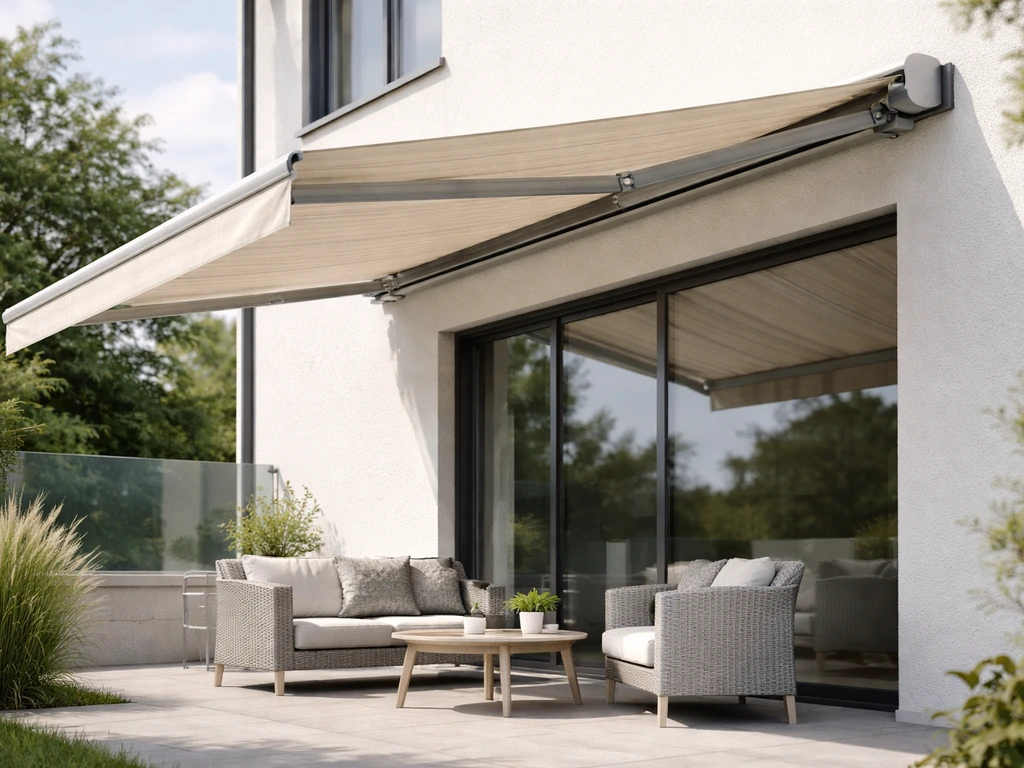
Quick price ranges: DIY vs. professional installation
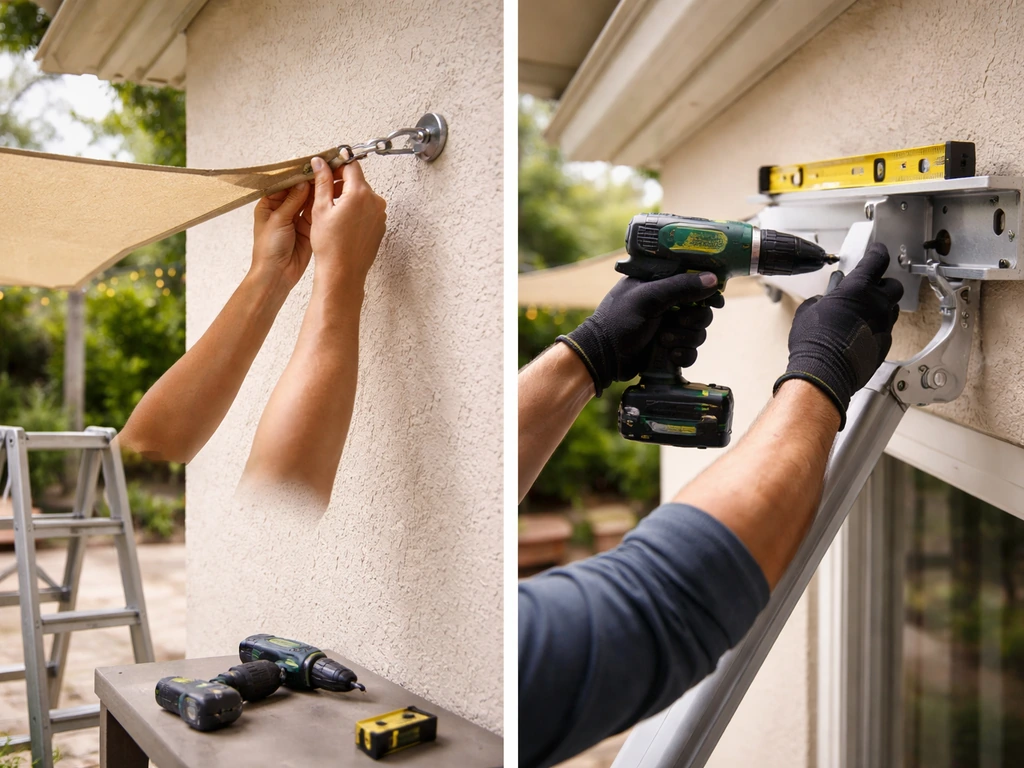
Here's a fast reference to anchor your budget before we dig into the details. These are realistic all-in numbers for a typical patio awning project on a single-family home.
| Awning Type | DIY Total Cost | Professional Install Total |
|---|---|---|
| Basic fabric/shade sail (small, ~100 sq ft) | $150 – $500 | $800 – $1,500 |
| Manual retractable fabric awning (10–12 ft wide) | $400 – $900 | $1,500 – $3,000 |
| Motorized retractable awning (12–16 ft wide) | $900 – $2,000 (kit) | $2,500 – $5,500 |
| Fixed aluminum patio cover/awning | $600 – $1,800 | $2,000 – $5,000 |
| Freestanding wood or metal pergola-style awning | $800 – $2,500 | $3,000 – $8,000+ |
The DIY column assumes you're buying a kit or materials and doing the labor yourself. It does not include tools you don't own yet. Professional install numbers come from national averages across multiple pricing sources and include labor, materials, and basic hardware, but not permits, electrical work, or upgrades like motors and sensors.
Cost breakdown by awning type and materials
The single biggest variable in your cost is the type of awning you choose. Fabric retractables and fixed aluminum covers are the two most common options for a patio, and they behave very differently in terms of installation complexity, durability, and price.
Retractable fabric awnings
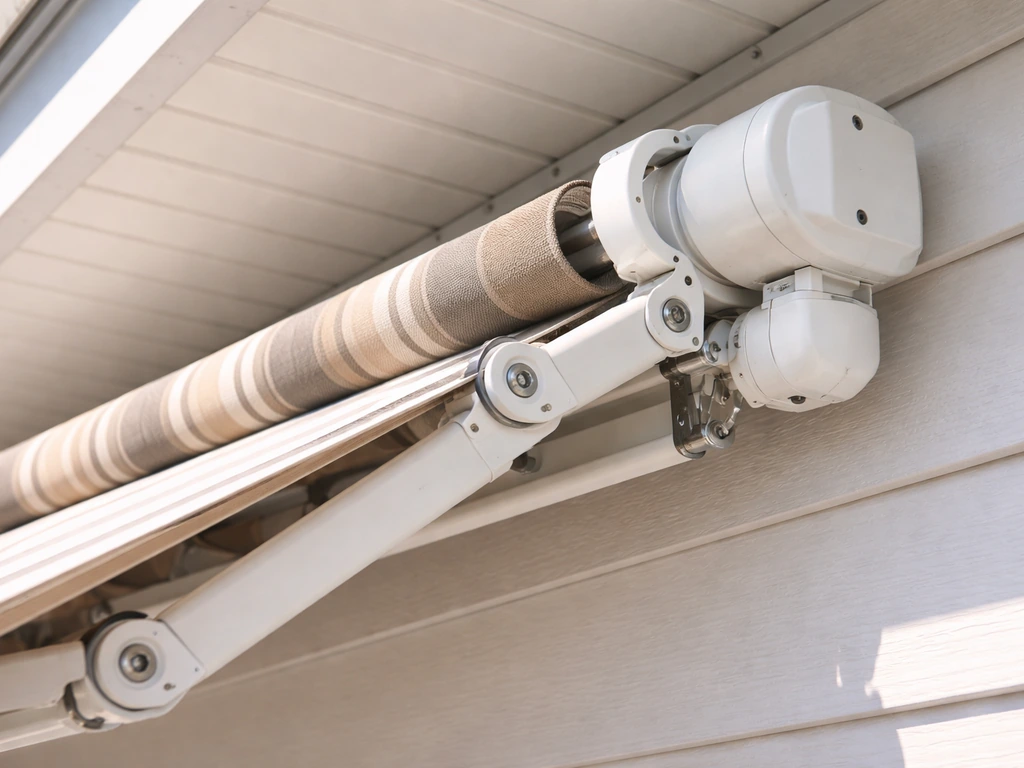
Retractable awnings, the kind that fold back on a horizontal arm system, are the most popular choice for patios attached to the house. Manual crank versions start around $400 to $900 for a decent 10-foot-wide unit you install yourself. Motorized versions add $300 to $600 to the product cost alone. Professional installation for retractable awnings runs roughly $12.50 to $27.50 per square foot all-in, which puts a 10x8-foot unit at about $1,000 to $2,200 in labor and materials combined. The install itself usually takes 2 to 4 hours for a pro team, but plan longer if you're doing it solo for the first time.
Fixed aluminum awnings and patio covers
Fixed aluminum awnings are permanent structures attached to the house fascia or wall with posts at the outer edge. They're more durable than fabric, require almost no maintenance, and can span larger areas. Installed costs run $15 to $30 per square foot, so a 200-square-foot aluminum cover lands between $3,000 and $6,000 professionally installed. DIY aluminum awning kits are available and can bring the cost down to $600 to $1,800 depending on size, but they require solid anchoring into wall framing, not just drywall.
Wood patio awnings and pergola-style covers
Wood structures cost more upfront and require more ongoing maintenance than aluminum, but they're the most attractive option and integrate well with existing architecture. Lumber, hardware, and finish for a basic 12x12-foot DIY wood awning can run $800 to $2,500 in materials depending on wood species and design. Cedar and redwood are popular because they resist rot naturally, but pressure-treated pine is cheaper and works fine with paint or stain. Professional installation for a wood patio awning or pergola-style shade structure typically starts at $3,000 and can exceed $8,000 for larger or more custom builds. If you're interested in going the wood route yourself, the design and build process is fairly involved, it helps to think through the framing before you price it out. If you want the full DIY walkthrough, review a dedicated guide on how to build an awning over a patio, including planning, materials, and installation steps.
Shade sails
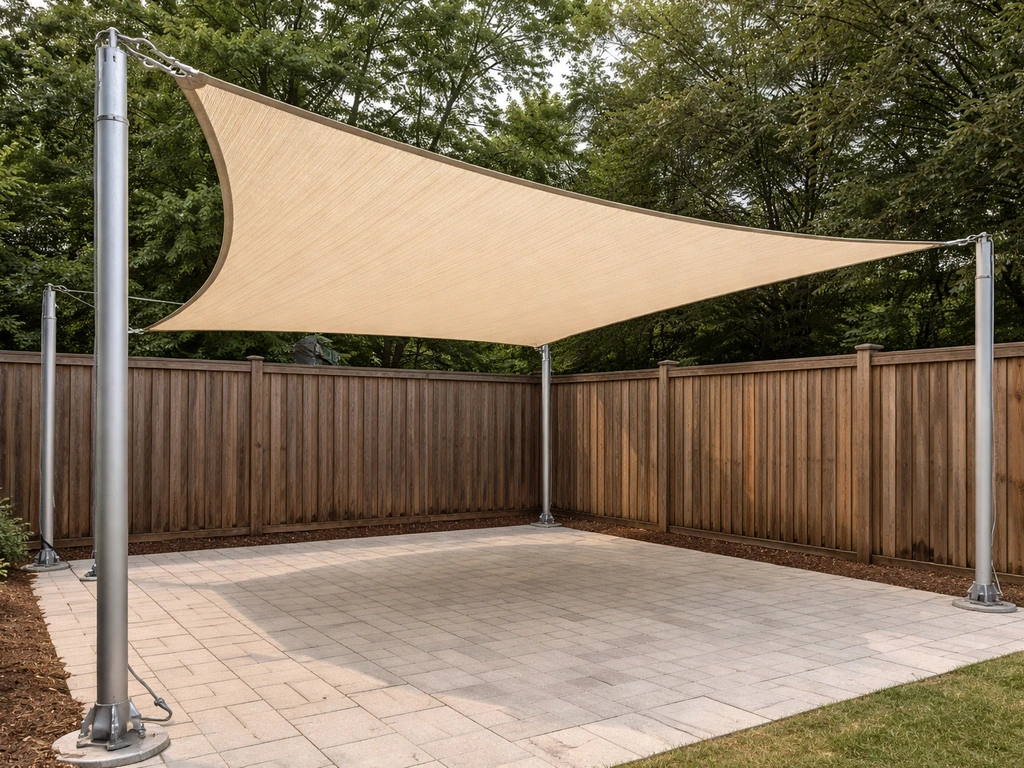
Shade sails are the budget-friendly option. A quality triangular or square sail for a 100–200 square foot area costs $80 to $400 for the sail itself. Add mounting hardware and posts if you don't have attachment points, and the DIY total usually lands between $150 and $700. Professional installation for a large shade sail (80+ square feet with new posts) can run $2,500 to $5,000 when post installation and tensioning are included.
What changes the price most: size, mounting, and site conditions
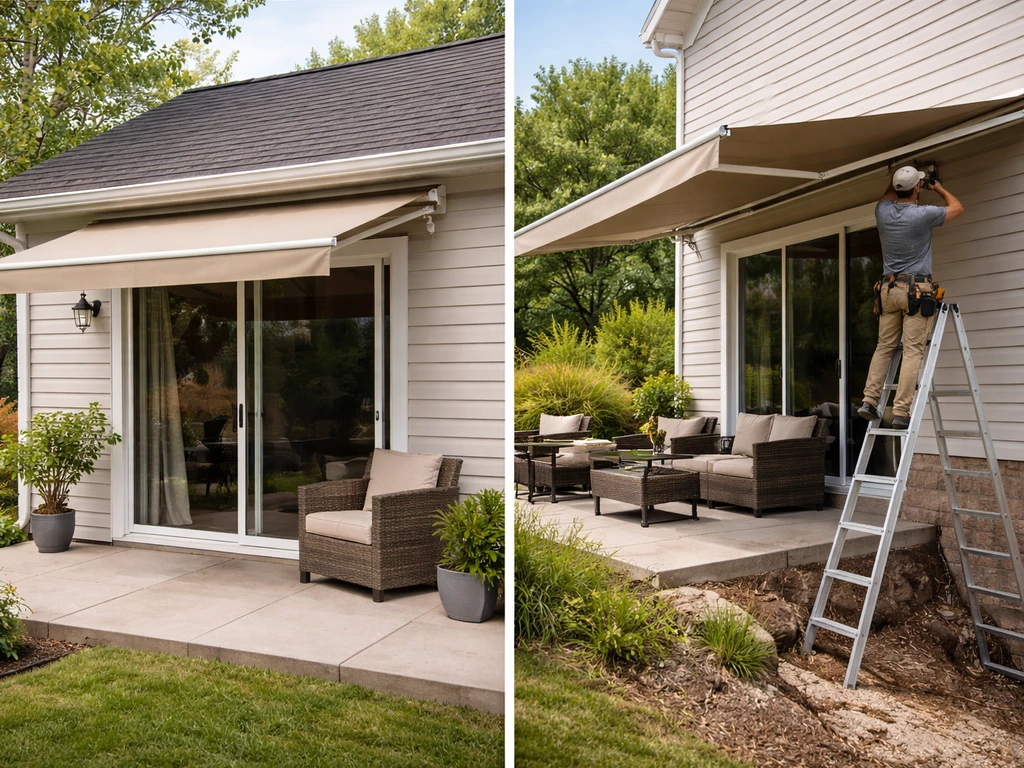
Beyond awning type, three things push costs up faster than anything else: how big the awning is, how it mounts to your house (or yard), and what conditions the installer is walking into. LawnStarter also notes that retractable awning pricing varies by product size and installation factors, and it provides 2026 pricing examples based on patio or deck size.
Size
Awning pricing is generally per-square-foot, so size scales linearly, mostly. A 10-foot-wide retractable awning and a 20-foot-wide one don't cost exactly double; the wider unit needs longer support arms and a heavier frame, which bumps up the material cost faster than the square footage alone suggests. Width is the primary measurement for retractable awnings (typically measured in linear feet), while fixed covers are priced by total covered square footage. A 12x10-foot fixed cover at 120 square feet is meaningfully cheaper per square foot than a 20x12-foot version at 240 square feet, because the larger one may need additional posts and deeper footings.
Mounting style
Wall-mounting to your house is typically the cheapest installation method because you're using the existing structure as one side of the support. But it only works if there's solid wood framing behind the mounting surface. Stucco, EIFS (synthetic stucco), vinyl siding, or older masonry walls all add complexity and cost, a contractor may need to locate studs with a stud finder, use masonry anchors, or install a ledger board first. Freestanding structures that don't attach to the house require post installation, concrete footings, and more labor, which adds $200 to $800 or more to the total depending on how many posts and how deep they need to go.
Site conditions
A flat patio with wood-framed walls and easy access is the best-case scenario. Costs go up quickly when the site has: a second-story install (scaffold or lift rental), a sloped patio that requires post height adjustment, concrete or pavers where drilling is needed for footings, or an existing awning or cover that needs to be removed first. Removal and disposal of an old structure can add $150 to $500 to a professional quote, and sometimes more if the old cover is large or complicated to disassemble.
Add-ons and extras that affect the total cost
Once you have a base awning, there are a handful of upgrades that are genuinely useful versus ones that are mostly nice-to-have. Here's what each typically adds to the price:
- Motorized operation (electric motor + remote): adds $300 to $700 for mid-range retractable awnings; premium motors with app control can add $1,000+
- Wind/sun sensors: automatic sensors that retract the awning in high wind or extend it in bright sun typically add $150 to $400
- Gutter integration or flashing: connecting the awning to an existing gutter or adding a drip edge adds $100 to $300 in materials and labor
- Side panels or drop screens: vinyl or fabric screens that hang off the sides for privacy or bug protection run $150 to $500 per panel installed
- LED lighting strip (built into the awning valance): $200 to $500 depending on length and brand
- Electrical rough-in for a motorized awning: if you don't have an outdoor outlet nearby, an electrician will charge $200 to $600 to run a dedicated circuit
- Fabric upgrade or replacement: if you're replacing fabric on an existing frame, expect $4 to $8 per square foot for the fabric itself, plus $50 to $150 in labor
The honest advice here: the motor is worth it for awnings wider than 14 feet, because a manual crank on a large awning is genuinely annoying. Wind sensors are worth adding if you're in a gusty climate, leaving a retractable awning extended in a windstorm can destroy it in minutes. Skip the LED lighting unless you specifically use the patio at night and want ambiance; it's easy to add later with battery-powered strips.
DIY budget: tools, hardware, and install cost expectations
Going DIY on a patio awning is realistic for most homeowners on retractable fabric awnings and shade sails. Fixed aluminum and wood structures require more confidence with structural work, but they're also very doable with careful planning. Here's what to budget for the DIY path.
Tools you'll need
Most awning installs require a drill (corded or impact driver), a stud finder, a level (at least 48 inches long for getting the mounting bracket right), a tape measure, and a ladder tall enough to work comfortably at eave height. Once you know whether you want a fixed or retractable style, you can follow a step-by-step guide for how to make an awning for a patio that matches your setup. For wood builds, add a circular saw and a post-hole digger or rented power auger if you're setting posts in concrete. If you're drilling into masonry, you need a hammer drill and masonry bits, you can rent a hammer drill for about $40 to $60 per day if you don't own one.
Hardware and consumables
Don't underestimate hardware costs. Lag screws, through-bolts, washers, masonry anchors, and exterior-rated hardware can add $40 to $150 to a project depending on what you're attaching to. For wall mounts into wood framing, you want 3/8-inch lag screws at least 3 inches long going into solid stud material, not drywall anchors, ever. For concrete or masonry, use wedge anchors or sleeve anchors rated for the load. Spend the money on stainless steel or hot-dipped galvanized hardware; zinc-plated screws will rust and stain your wall within a couple of seasons.
Step-by-step cost expectations for a DIY retractable awning install
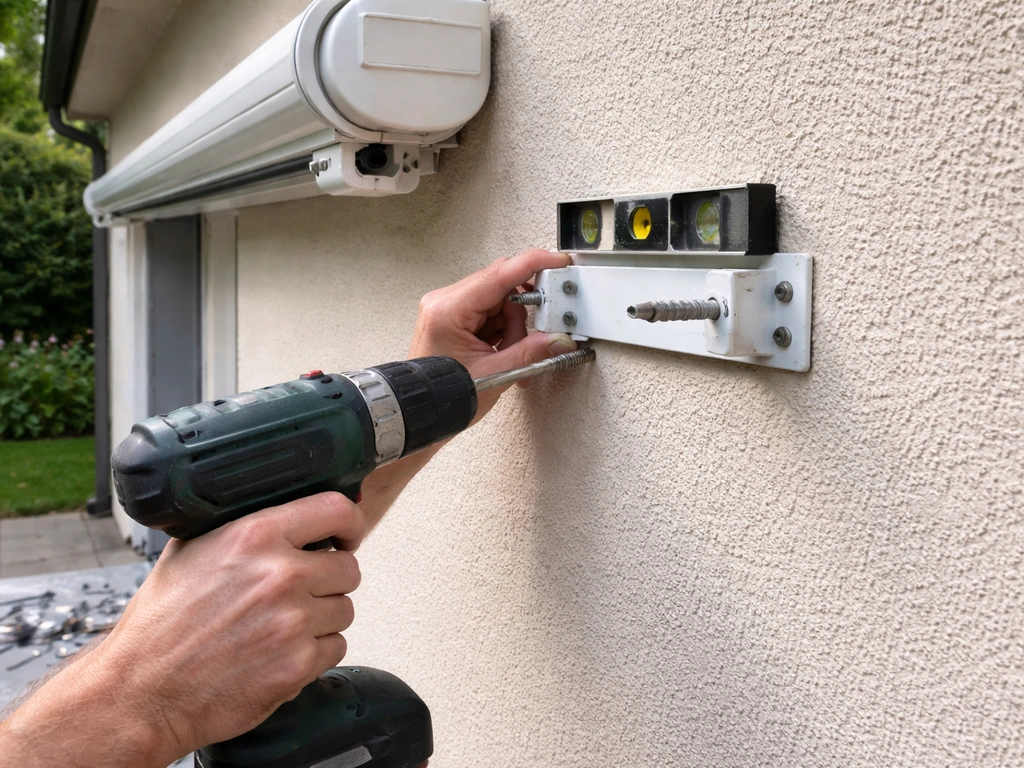
- Buy the awning kit ($400 to $1,800 depending on size and motor): most name-brand kits include the frame, fabric, mounting brackets, and hardware
- Pick up any missing hardware at the hardware store ($20 to $80): extra lag screws, a tube of exterior silicone caulk, and a masonry bit if needed
- Rent a hammer drill if drilling into masonry ($40 to $60/day)
- Budget a half-day to full day of your time for a standard 10–14 ft wide wall-mount install
- If adding a motor: hire an electrician for the outlet if needed ($200 to $600), or budget $0 if you already have a GFCI outlet within reach
Total DIY cost for a motorized 12-foot retractable awning: realistically $900 to $1,600 including the kit, hardware, and electrical work if needed. Compare that to $2,500 to $4,000 professionally installed for the same unit, and you're looking at $1,000 to $2,500 in savings for a few hours of work. If you want to go even cheaper, there are solid guides on how to build a cheap patio awning from scratch using basic lumber and shade cloth that can get total costs under $400. If you’re comparing options, learning how to build a cheap patio awning from simple lumber and shade cloth can help you target a budget under $400.
Common DIY mistakes that cost money
- Mounting into siding instead of the framing behind it — the awning will pull away from the wall under wind load
- Getting the pitch wrong — an awning that doesn't slope enough (at least 5 to 10 degrees) will pool water and wear out the fabric fast
- Underestimating the weight — a fully extended 16-foot fabric awning with arms can weigh 80 to 150 lbs; your wall attachment needs to handle that load plus wind
- Skipping caulk at the wall penetrations — water gets behind the bracket and rots whatever is back there over a few seasons
Permits, inspections, and structural and safety considerations
Whether you need a permit depends entirely on your local jurisdiction and what you're building. Here's the general rule of thumb: retractable fabric awnings that attach to the wall and don't have posts or footings are usually considered temporary structures in most municipalities and often don't require a permit. Fixed covers, permanent wood or aluminum structures, freestanding pergolas with footings, and anything that creates enclosed space almost always do require a permit.
Permit costs for a patio cover or awning typically run $50 to $300 for residential projects, and inspections are usually included. Some areas require engineered drawings for any attached patio cover over a certain square footage (often 200 square feet or more). Getting caught without a permit isn't just a fine risk, it can affect your homeowner's insurance coverage and complicate a future home sale when title searches turn up unpermitted work.
On the structural side: if you're attaching an awning or cover to your house, you're transferring load to the wall. That's fine for most wall-framed construction when you hit the studs, but it's worth thinking through a few things. Older homes may have undersized framing. Homes with stucco exteriors may have wood rot behind the surface that isn't visible until you start drilling. And any structure with posts needs footings deep enough to meet your local frost depth requirements, typically 12 to 36 inches depending on climate. A quick call to your local building department before you start takes 10 minutes and can save a lot of headaches.
When to stop and call a pro: if you open up a wall penetration and find rot, if your home is older than 1980 and has textured exterior coatings you can't identify, if you're working above 10 feet off the ground without a stable platform, or if any part of the electrical work goes beyond plugging into an existing outdoor outlet, get professional help for that piece. There's no DIY badge worth a structural failure or an electrical fire.
How to measure, spec, and get accurate quotes
The fastest way to get a useful quote, whether you're pricing out a kit for yourself or calling contractors, is to show up with real measurements and a clear description of your wall type. Once you know your measurements and wall type, you can narrow down where to buy a patio awning, whether you want a kit or professional installation where can i buy an awning for my patio. Vague requests get vague numbers. Here's exactly what to measure and note down before you buy anything or call anyone.
- Width of the area you want to shade (measure along the house wall, in feet and inches)
- Projection depth — how far out from the house you want the awning to extend (typically 8 to 14 feet for a patio cover)
- Height of the mounting point — measure from the ground to where the awning bracket will attach on the wall (usually just below the roofline or at door-header height)
- Wall material at the mounting point — wood siding, stucco, brick, EIFS, vinyl, etc.
- What's behind the wall — stud framing, concrete block, or unknown (look in the attic or basement if you can)
- Whether there's an existing outdoor electrical outlet within 10 feet of where the motor would need to be
- Presence of a gutter at the roofline and whether it needs to be worked around
- Any existing structure that needs to be removed first
With those numbers in hand, you can use the per-square-foot installed rates from earlier to estimate your range before you talk to anyone. Multiply your total coverage area (width x projection) by $15 to $30 for a fixed aluminum cover, or use $12.50 to $27.50 per square foot as a benchmark for a retractable awning install. Add in your add-ons from the list above, and you'll have a realistic ballpark that won't shock you when the quote arrives.
When getting contractor quotes, get at least three. Ask each one to break out labor and materials separately, and ask specifically what happens if they find wall damage or missing blocking during installation, you want to know the hourly rate for unexpected work before it shows up on a final invoice. A reputable installer will walk through your measurements with you on-site before quoting, not just eyeball it from the driveway.
If you're leaning toward DIY, measuring accurately before you order a kit is critical, most awning kits are sized in 2-foot increments, so a 13-foot-wide opening means you're buying the 14-foot kit, not the 12-foot one. Order the next size up rather than trying to stretch a too-small unit. And before you finalize the design, think through whether you're building something permanent or something you'd want to remove seasonally, that decision alone changes which type of awning makes the most sense and how you should approach the whole project.
FAQ
What’s the cheapest patio awning option if I want it installed professionally?
Shade sails are usually the lowest-cost professional route, especially when you already have solid attachment points or you keep the area around 100 to 200 square feet. If you need new posts, expect the total to rise quickly because post installation and tensioning are labor-heavy.
Are there any hidden costs that commonly show up on the final bill?
Yes, two big ones are site conditions and electrical scope. If the contractor discovers missing blocking behind the wall, damaged siding, or unexpected framing, pricing can change. For retractable motorized awnings, confirm whether the quote includes running new wiring, adding a switch, or only connecting to an existing outdoor outlet.
How do I estimate cost when my patio width and awning projection aren’t a perfect rectangle?
Use the actual covered area, but remember pricing differs by type. For fixed aluminum, use total covered square footage (width x projection) as the cleanest estimator. For retractables, pricing often keys off width in linear feet, so if your usable space is irregular, measure the maximum workable awning width and separately account for any extra posts or custom brackets.
If my wall is stucco or EIFS, will it cost more to install a wall-mounted awning?
Often, yes. Contractors may need to locate studs through the finish, then use ledger boards or the correct anchor systems, which can add labor. Also expect more careful waterproofing details at penetrations, since incorrect anchoring or flashing can lead to leaks even if the awning itself is installed correctly.
Do I need an electrician for a motorized awning?
Not always, but clarify the boundary in your quote. If wiring is limited to connecting to an existing outdoor receptacle, some installers handle it. If you need new wiring runs, a new circuit, or a hardwired control, you should assume an electrician may be required, which changes your total budget.
What’s the typical cost impact of removing an old awning or cover?
Removal and disposal commonly adds roughly $150 to $500 to a professional quote, but it can be higher if the old unit is large, complicated to disassemble, or if there’s damage under the existing mounting areas that must be repaired before installing the new hardware.
How much more does a retractable awning cost when it’s wider than my standard 10 to 12 feet?
Expect a more-than-linear increase because larger widths need heavier support arms and stronger frames, even though pricing is often discussed per square foot. A practical rule is to budget for additional hardware and higher labor time once you move past around 14 feet, especially if you choose motorization.
Should I buy a kit that’s slightly smaller than my measured opening to keep it tidy?
No, order the next size up. Many kits are sized in fixed increments (commonly 2-foot steps), and squeezing a too-small awning can leave uncovered gaps or require poor alignment. Measure width carefully, then choose a kit that covers the full intended span.
Do permits change the cost a lot?
They can, but usually not dramatically. Residential permit costs commonly land around $50 to $300, yet the bigger risk is engineered drawings in some areas for attached covers above certain square footage thresholds (often around 200 square feet). Also, unpermitted work can complicate insurance and future resale.
When is it worth paying a pro instead of DIY?
Call a pro for anything involving structural uncertainty or electrical work beyond a simple plug-in. Specific triggers include discovering rot after drilling, working above 10 feet without a stable platform, not being able to identify wall framing behind siding, or any electrical task that goes past connecting to an existing outdoor outlet.